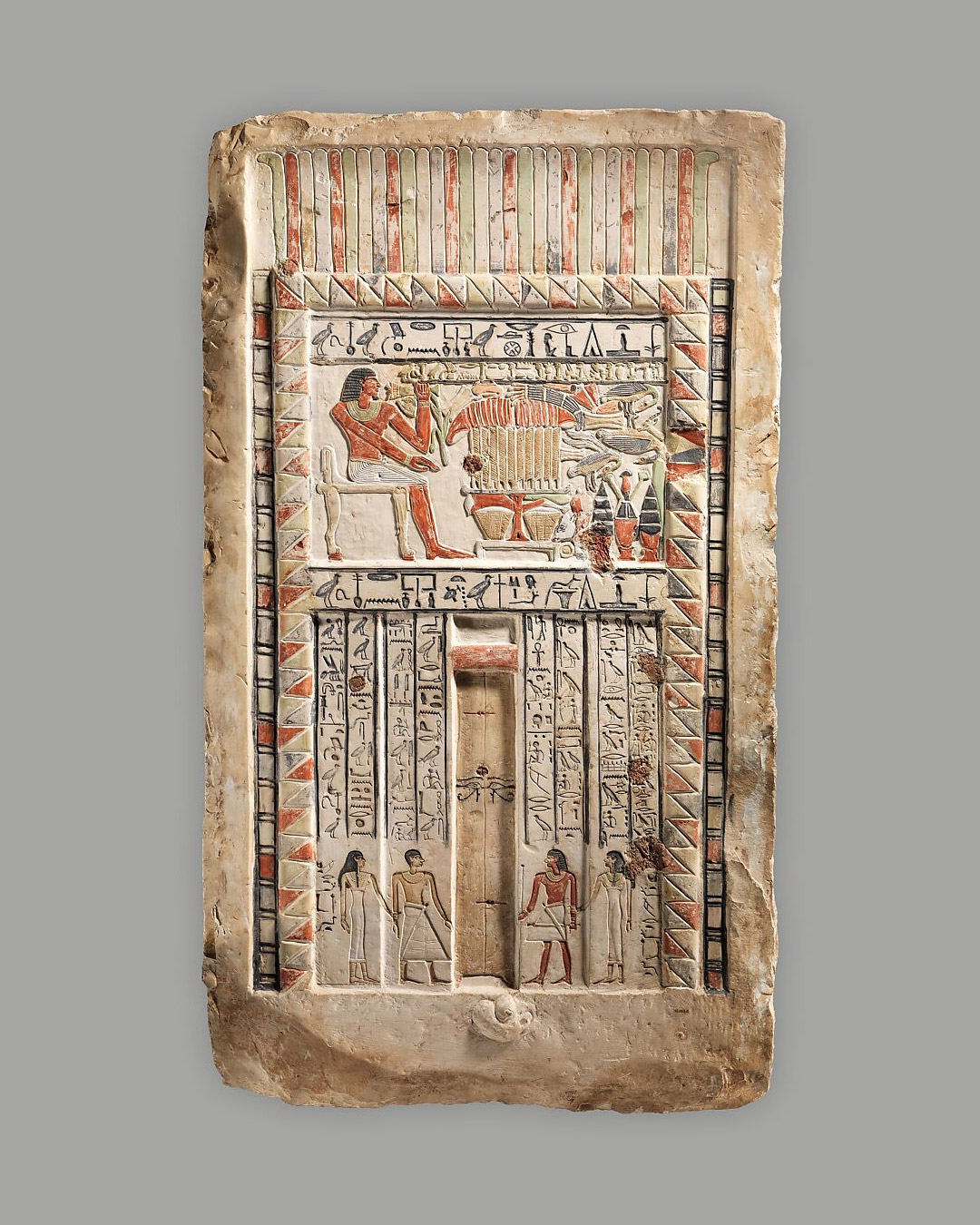
False Doors
You’re lost in an ancient Egyptian tomb, and you’ve come across something called a false door. They’re not your typical doors that lead you to another room, or out of the maze of tombs you’ve found yourself in. Instead, they’re symbolic gateways between the world of the living and the dead. Probably not what you were looking for, but bear with me.
Crafted from a single slab of stone or a sturdy wooden plank, these false doors show off the amazing craftsmanship of the ancient Egyptians. Take this one from the First Intermediate Period, for example. It depicts Neferiu, a Royal Sealer entrusted with safeguarding the treasury, sitting in front of a table laden with offerings. As time progressed, false doors became more elaborate, inscribed with writings detailing the good deeds of the deceased. See how the main panel is adorned with inscriptions, while the surrounding panels add depth?
You appear to be a bit anxious there, in the dark, holding a rapidly dimming torch with no food or water, but this is where you might be in luck. False doors served as places where the living could leave offerings and gifts for the departed, believing the souls of the dead needed sustenance to carry on in the afterlife. So have a good look around, you might find a stale chunk of bread, or some shriveled fruit.
Now before you go, it’s worth noting that these doors were used by the ancient Egyptians throughout much of their civilization’s history, and their significance and design even influenced other ancient cultures like Mesopotamia, Mesoamerica, and the Hellenistic period of Greece and Rome.
As for me, I’m often talking about crossing through a portal to collect artifacts from the world of Ghoul, so I’m drawn to the Egyptian’s false doors and the metaphysical journey they represent. There’s something delicious about the mystery of a secret doorway, don’t you think?
Anyway, I’ve rambled on long enough haven’t I? I’m not exactly sure how to get out of here; though you might want to try heading that way and taking the third tomb on the left.