Tiny Fables Design Festa Report
The second time I exhibited at Design Festa in Tokyo, I arrived with tempered expectations.
Only weeks earlier, I’d run a five-day pop-up at Tefu Lounge, a stylish café and event space in Shimokitazawa. The exhibition looked beautiful, the atmosphere was warm, and people responded positively to the work. Yet financially, the result was disappointing. After rental costs and advertising, the event ultimately operated at a loss of ¥35,000 (AUD$350).
My takeaway from the experience was that café audiences, even in busy creative districts, aren’t mentally prepared to purchase high-priced artwork. Across five days, I sold 4 framed artworks, 16 books, and 20 sticker sheets. The framed works attracted attention, but the environment itself encouraged casual browsing rather than considered collecting.
The audience at Design Festa felt different from the moment the doors opened.
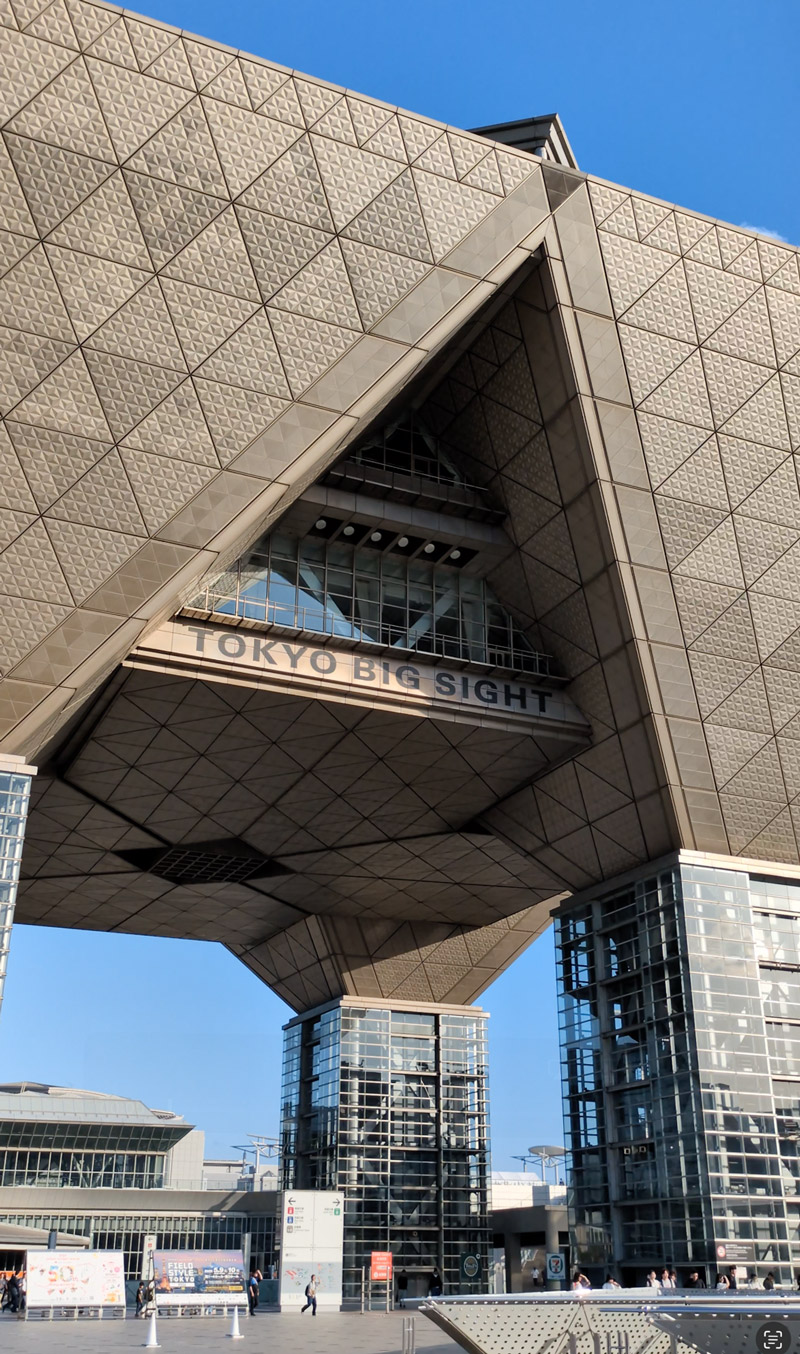
Held twice a year at Tokyo Big Sight on Tokyo Bay’s Odaiba island, Design Festa is the largest art market in Japan. The scale is difficult to comprehend until experienced firsthand: thousands of artists, enormous exhibition halls, crowds flowing continuously through the venue, and an atmosphere that feels closer to a cultural festival than a conventional market. More than 6,500 booths filled the halls this year, attracting hundreds of thousands of visitors over the weekend.
Tokyo Big Sight itself amplifies the spectacle. Its famous inverted pyramid structures tower above the surrounding halls, creating a setting that feels futuristic and strangely theatrical — a fitting backdrop for one of the most chaotic and energetic art events in the country.
To my relief, financially the event was a success.
The booth itself cost approximately ¥120,000 (AUD$1,200) to rent. Advertising and marketing totalled around ¥20,000 (AUD$200), mostly via boosted Reels on Instagram. Altogether, the event cost approximately ¥140,000 (AUD$1,400).
Sales over the two days reached ¥229,800 (AUD$2,290), resulting in a profit of ¥89,000 (AUD$890). I sold 6 framed artworks, 50 books, and 38 sticker sheets.
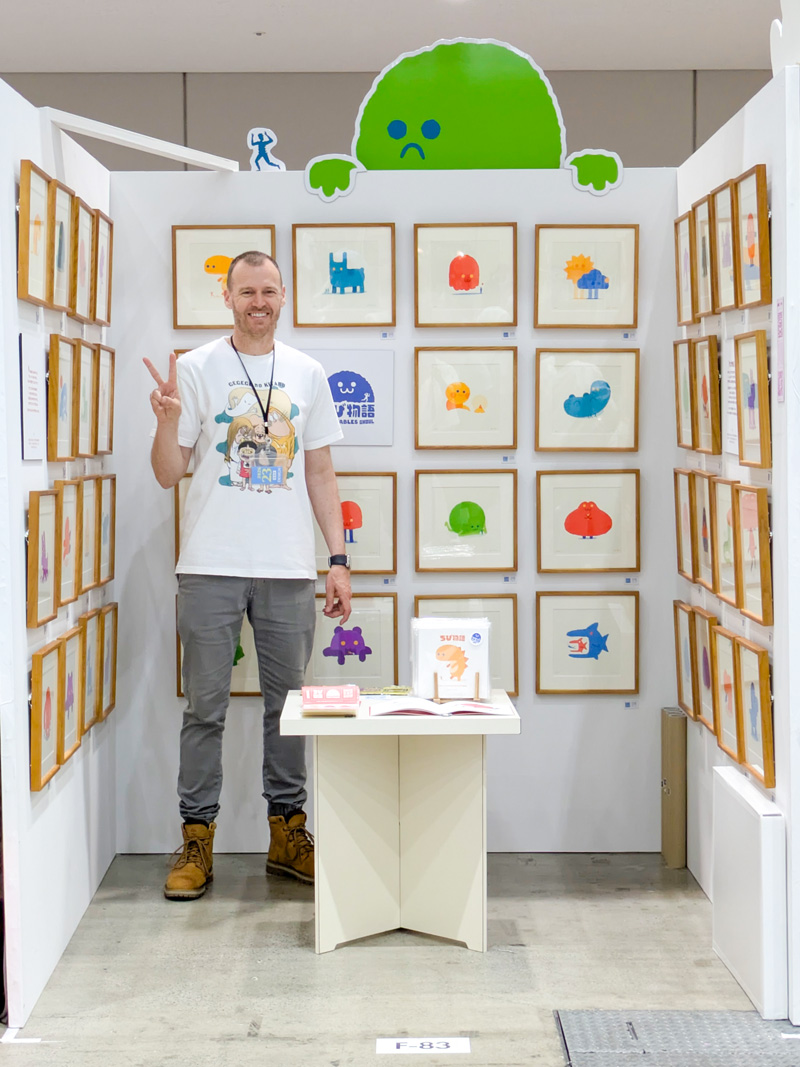
I always put a lot of effort into presentation, and the booth stood out visually.
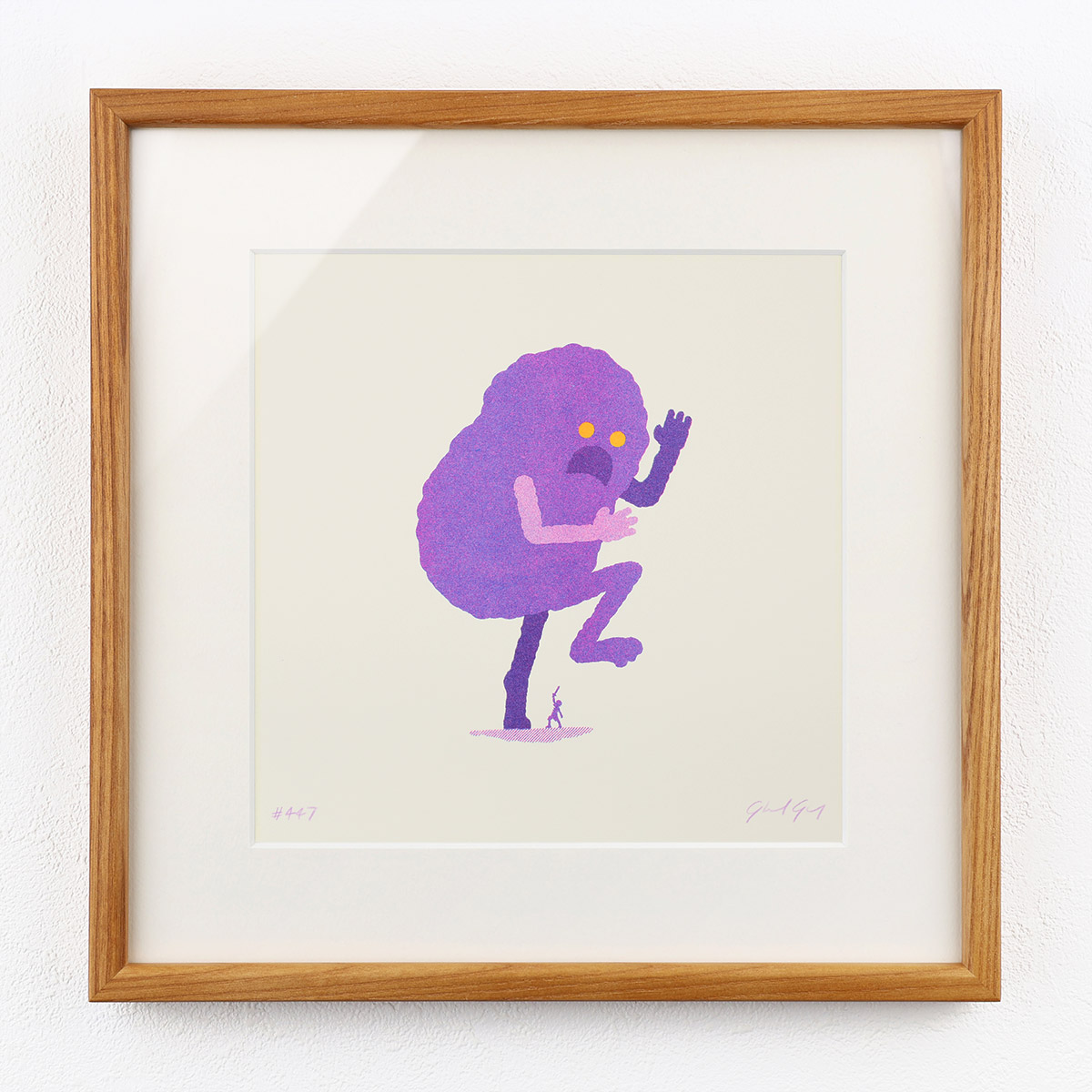
Forty-five framed artworks covered the walls, creating a miniature gallery space within the larger market environment. Compared to many neighbouring booths selling low-cost prints, stickers, keychains, and posters, the Tiny Fables booth presentation felt elevated and highly curated. Visitors consistently stopped, photographed the booth, and commented on the quality of the display. Even people who did not purchase anything often lingered to study the work.
Yet Design Festa also exposed the limits of premium pricing within that environment.
Most visitors arrived with relatively modest budgets. Many asked for postcards, giveaways, or inexpensive collectibles. The dominant economy of Design Festa is built around accessible merchandise: acrylic charms, stickers, small prints, zines, and impulse purchases. In that context, ¥22,000 framed artworks sit at the very upper edge of what most attendees are willing to spend.
Only six framed works sold across the weekend, despite receiving overwhelming positive attention. Interestingly, two of those sales came from overseas visitors — one Australian and one American — leaving only four Japanese collectors purchasing at that price point.
That contrast clarified something important for me.
The work itself resonates with people. The challenge is price, and practicality – renters can’t hang the pieces in their homes.
The economics of the project remain significant.
The risograph printing itself cost approximately ¥110,000 (AUD$1,100), while framing fifty artworks cost ¥275,000 (AUD$2,750). Although six framed works sold, substantial inventory remains, with 40 framed artworks and approximately 490 unframed risograph prints.
To make the project truly profitable, significantly more framed works need to sell.
My instinct is that these framed risograph works would perform far better within a premium retail setting in areas such as Daikanyama, Shibuya, or Shinjuku — spaces where visitors arrive specifically intending to engage with and potentially purchase higher-value artwork. A venue like Daikanyama T-Site feels far more aligned with the direction I ultimately want the project to take.
Still, the intangible benefits of Design Festa were considerable.
I gained many new email subscribers, Instagram followers, and promising professional connections. Like many creative events, some of the most important returns were relational rather than immediate financial outcomes.
The event also reinforced the growing importance of social platforms — particularly X.
One nearby booth maintained an enormous queue throughout the weekend and sold out almost entirely on the first day before restocking for the second. According to the exhibitors themselves, much of that success came from sustained promotional activity on X, where Japanese artist communities remain highly active and responsive.
If I were to approach Design Festa purely as a business exercise, the optimal strategy would be:
– Low-cost products
– High-volume sales
– Aggressive social media promotion
– Strong pre-event hype
But emotionally and creatively, I feel conflicted.
I’m far more interested in creating premium, high-value artworks than producing large volumes of inexpensive merchandise. While selling keychains and low-priced goods may generate consistent revenue, it’s difficult to imagine sustaining the amount of production, event attendance, and logistical labour required to build a meaningful income that way.
The more I reflect on Design Festa, the more it feels like an important stepping stone rather than a final destination.
The event proved that the work can attract attention. It proved that presentation matters. It proved that people connect emotionally with the Tiny Fables world. But it also clarified the direction I want to pursue moving forward.
Rather than focusing on endless market events and low-margin merchandise, my attention should shift toward gallery exhibitions, premium retail spaces, and representation opportunities within Japan’s contemporary art scene.
Design Festa succeeded — but perhaps most importantly, it helped define for me what success should look like next.